The Ultimate History of Chelsea Football Club: From Stamford Bridge to Global Football Superpower
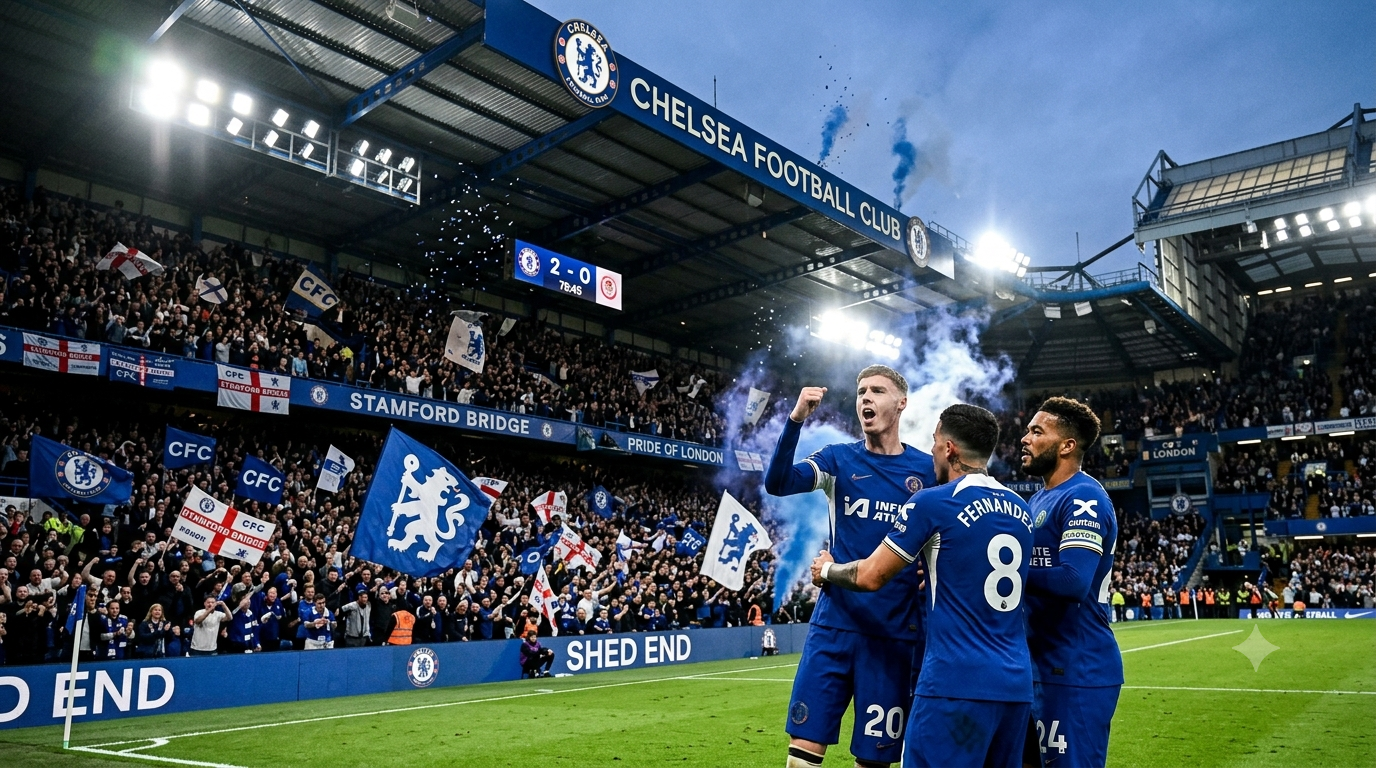
The story of Chelsea Football Club is one of the most cinematic, volatile, and fascinating narratives in the history of global sport. Founded not out of a community movement or a working-class church group, but born from an ambitious business venture to fill an empty stadium, Chelsea FC has evolved from a eccentric, fashionable London club into a relentless, trophy-winning powerhouse.
For over a century, the club based in Fulham, West London, has experienced every facet of footballing reality: the joy of early league triumphs, the glitz and glamour of the swinging sixties, the dark despair of near-bankruptcy and hooliganism in the 1970s and 80s, the cosmopolitan rebirth of the 1990s, the ruthless financial dominance of the Roman Abramovich era, and the modern, multi-billion-pound youth experiment under Clearlake Capital.
This is the definitive, comprehensive history of Chelsea Football Club—The Blues.
Act I: The Catalyst and Foundation (1904–1905)
The Vision of Gus Mears
To understand the birth of Chelsea FC, one must look not at a ball, but at a plot of land. In 1904, Gus Mears, a wealthy construction businessman and football enthusiast, along with his brother Joseph Mears, acquired the Stamford Bridge Athletics Grounds in Fulham, West London. The Mears brothers envisioned turning the athletic arena into one of the finest, most modern football stadiums in the United Kingdom.
Initially, Gus Mears offered to lease the stadium to the already established nearby club, Fulham Football Club. However, a dispute arose over the price of the rent. Fulham’s management deemed the lease fee too expensive and rejected the offer. Undeterred, and rejected by his first choice, Mears considered selling the land to the Great Western Railway Company, who wanted to use it as a coal yard.
Legend has it that Mears’ colleague, Frederick Parker, persuaded him not to give up on the football dream. While walking through the grounds, Mears’ Scotch Terrier bit Parker on the leg. Instead of getting angry, Parker laughed it off, demonstrating a resilience that impressed Mears. Convitched by Parker’s enthusiasm and financial foresight, Mears decided to take a massive gamble: if he couldn’t find a football team for his stadium, he would simply build a brand-new stadium and create a brand-new football team from scratch to fill it.
The Historic Meeting at The Rising Sun
On March 10, 1905, a historic meeting took place upstairs at The Rising Sun pub (now renamed The Butcher’s Hook), located directly opposite the main gates of Stamford Bridge on the Fulham Road.
Several crucial decisions had to be made, most notably the name of the club. Because there was already a Fulham FC in the borough, alternative names were fiercely debated, including:
- Kensington Football Club
- Stamford Bridge Football Club
- London Football Club
Ultimately, the founders settled on Chelsea Football Club, naming it after the adjacent metropolitan borough of Chelsea, because it sounded prestigious and distinctive.
[Fulham FC Rejects Lease] ➔ [Gus Mears Founds Chelsea FC] ➔ [March 10, 1905: The Rising Sun Pub]
The Architectural Marvel of Archibald Leitch
Mears hired the legendary Scottish stadium architect Archibald Leitch to design Stamford Bridge. Leitch, who also designed iconic grounds such as Old Trafford, Anfield, and Ibrox, constructed a masterpiece. It featured a 5,000-seater main stand and massive terraced banking built from the earth excavated during the construction of the London Underground’s District Line. When it opened, Stamford Bridge had an official capacity of around 100,000, making it the second-largest stadium in England behind Crystal Palace.
Chelsea applied for admission to the Southern League, but due to objections from Tottenham Hotspur and Fulham, they were rejected. Undeterred, the ambitious club applied directly to the Football League. On May 29, 1905, their political maneuvering paid off, and Chelsea FC was voted into the Second Division of the Football League before they had even played a single competitive match—a feat virtually unheard of in English football history.
Act II: The “Pensioners” and Early Flirts with Glory (1905–1952)
The Birth of The Pensioners
Chelsea adopted their first nickname, The Pensioners, due to the club’s close relationship with the historic Royal Hospital Chelsea, home to British war veterans (the Chelsea Pensioners). The club’s first crest featured the image of a bearded Chelsea Pensioner, a symbol that remained for nearly half a century.
The team initially took to the pitch wearing mint green shirts, white shorts, and dark blue socks. However, this color scheme lasted only a year before the club switched to the now-iconic royal blue shirts, white shorts, and royal blue socks.
Chelsea’s first official match took place on September 2, 1905, a 1-0 away defeat to Stockport County. However, their first home game at Stamford Bridge, a friendly against Liverpool, resulted in a 4-0 win and gave a glimpse of the club’s drawing power, attracting over 11,000 fans.
William “Fatty” Foulke: The First Superstar
To attract crowds, Chelsea signed the ultimate crowd-puller: goalkeeper William “Fatty” Foulke. Standing at 6 feet 4 inches and weighing anywhere between 28 and 32 stone (around 140–200 kg), Foulke was an eccentric giant and a brilliant shot-stopper.
Foulke was a master of showmanship. To make himself look even more imposing, Chelsea placed two small boys behind his goalpost to act as ball boys, inadvertently inventing the concept of ball boys in modern football. Foulke’s presence helped Chelsea draw massive crowds, cementing Stamford Bridge as a hub of sports entertainment.
Up and Down the Divisions
Led by prolific goalscorer George Hilsdon (nicknamed “Gatling Gun” for his ferocious shot), Chelsea won promotion to the First Division in only their second season (1906–07). Hilsdon became the first Chelsea player to score 100 goals for the club, and a weather vane modeled on him was erected on the roof of the East Stand, where it still stands today.
Despite their financial wealth and huge attendances, early Chelsea earned a reputation as an unpredictable “music hall” club—capable of dazzling entertainment but lacking the gritty consistency needed to win trophies. They were relegated in 1910 but bounced back immediately.
In 1915, with the shadow of World War I looming over Europe, Chelsea reached their first major final: the FA Cup Final against Sheffield United. Played at Old Trafford, the match became known as the “Khaki Cup Final” due to the high number of uniformed soldiers in attendance. Chelsea lost 3-0, missing out on their first taste of silverware.
The Interwar Years: Star-Studded but Silverware-Starved
During the 1920s and 1930s, Chelsea established a reputation that would stick with them for decades: they were the glamour club of London. They spent heavily on high-profile international stars, particularly from Scotland, such as Hughie Gallacher, Alex Jackson, and Alec Cheyne.
Stamford Bridge hosted three consecutive FA Cup Finals from 1920 to 1922 before the event moved to Wembley Stadium. The crowds remained massive—on October 12, 1935, an astonishing 82,905 spectators packed into Stamford Bridge for a league match against Arsenal, which remains the highest authenticated league attendance in the club’s history.
Yet, despite the crowds and the star names, the team underachieved on the pitch. The phrase “Doing a Chelsea” became part of the English football lexicon, meaning to drop points or lose spectacularly when victory seemed completely assured.
Act III: The Ted Drake Revolution and the First Title (1952–1961)
Modernizing the Club
By 1952, Chelsea had spent nearly 50 years in existence without winning a single major trophy. The club’s board decided it was time for radical change and appointed former Arsenal and England forward Ted Drake as manager.
Drake was a modernizer who despised the old “music hall” image of the club. He famously declared:
“Too many people come to Stamford Bridge to see a football match instead of supporting Chelsea. For years, players have been turning out looking like film stars instead of footballers. We’ve got to stop being music-hall comedians.”
Drake immediately initiated a sweeping cultural revolution across the club:
- Abolishing the Pensioner Crest: He banished the old veteran logo, replacing it briefly with the initials “CFC” before unveiling the iconic blue crest featuring a ceremonial lion rampant regardant holding a staff, inspired by the coat of arms of the Metropolitan Borough of Chelsea.
- Changing the Nickname: He demanded that the media and fans stop calling the team “The Pensioners.” From that moment on, Chelsea would be known simply as The Blues.
- Scouting the Lower Leagues: Drake stopped the practice of buying expensive, over-the-hill superstars. Instead, he combed the lower divisions and amateur leagues for hungry, disciplined young players.
- Improving Training Regimes: He introduced rigorous tactical training and physical conditioning, moving away from the relaxed routines of the past.
[Old Pensioner Image] ➔ [Ted Drake Appointed (1952)] ➔ [Lion Crest & "The Blues" Identity Born]
The Miracle of 1954–1955
Drake’s blueprint reached its ultimate fulfillment during the 1954–55 season, the club’s jubilee year. Chelsea started the season poorly, losing their opening four games, and few predicted what was to come.
However, spearheaded by captain and local legend Roy Bentley, an incredibly industrious forward who scored 21 league goals that season, Chelsea mounted a stunning run. Backed by key players like winger Eric Parsons, midfielder John Harris, and homegrown talent Frank Blunstone, Chelsea found a relentless consistency.
The pivotal match of the season arrived in April 1955 against their main title rivals, Wolverhampton Wanderers. Wolves were the reigning champions and considered the best team in the land. In a tense, dramatic encounter at Stamford Bridge, Chelsea secured a legendary 1-0 victory thanks to a late penalty from Peter Sillett.
On April 23, 1955, Chelsea defeated Sheffield Wednesday 3-0 to officially secure their first-ever First Division Football League Championship. Ted Drake had achieved the unthinkable, becoming the first man to win the English league title as both a player (with Arsenal) and a manager.
The European Disappointment
As champions of England, Chelsea were invited to compete in the inaugural European Champion Clubs’ Cup (now the UEFA Champions League) for the 1955–56 season.
However, they were denied their place in history by the insular politics of the English football establishment. The Football League, led by its secretary Alan Hardaker, viewed European competition as a distraction and pressured Chelsea to withdraw. Reluctantly, the Chelsea board acquiesced, robbing Ted Drake’s side of the opportunity to test themselves against the likes of Real Madrid on the continental stage.
Following the title win, the squad aged rapidly. Drake attempted to rebuild the squad using youth players from Chelsea’s highly successful youth system—a group that became known as “Drake’s Ducklings.” Among them was a young, incredibly prolific striker named Jimmy Greaves, who scored 132 goals in just 169 games for the club, including an astonishing 41 goals in the 1960–61 season. However, the team’s defensive frailties meant they could not sustain success, and Drake was dismissed in October 1961 after a poor run of results.
Act IV: The Kings Road, Style, and Cup Glory (1961–1975)
Tommy Docherty and “The Doc’s Diamonds”
Following Drake’s departure, the club appointed 33-year-old former Chelsea player Tommy Docherty as player-manager. “The Doc” revitalized the club by completely dismantling the remnant squad and trusting the youth academy.
Docherty built a vibrant, high-tempo, tactically flexible team known as “The Doc’s Diamonds.” This side featured a golden generation of legendary Chelsea names:
- Terry Venables: A brilliant, tactically astute midfielder.
- Bobby Tambling: A lethal left-wing forward who would hold Chelsea’s all-time scoring record (202 goals) for nearly half a century.
- Peter Bonetti: Nicknamed “The Cat,” a revolutionary goalkeeper famous for his incredible reflexes and for being one of the first to throw the ball out to launch quick counter-attacks.
- Ron “Chopper” Harris: A uncompromising, fiercely tough-tackling defender who would go on to set the club record for total appearances (795 games).
Docherty changed the kit configuration, introducing white socks and blue shorts, a look that remains synonymous with the club today. Under his guidance, Chelsea won the League Cup in 1965, beating Leicester City over a two-legged final, and reached the FA Cup Final in 1967, losing to Tottenham. However, Docherty’s volatile personality led to clashes with key players and the board, resulting in his departure in 1967.
Dave Sexton and the Glamour of the Chelsea Style
Docherty’s successor was the calm, tactically profound Dave Sexton. Sexton inherited the explosive raw talent of the 60s squad and injected defensive discipline and tactical maturity.
During the late 1960s and early 1970s, London was the epicenter of global pop culture, fashion, and music. The epicenter of London culture was the King’s Road, located just a short walk from Stamford Bridge. Chelsea FC became the ultimate sporting manifestation of the “Swinging Sixties.”
Stamford Bridge became a playground for celebrities, with superstars like Michael Caine, Steve McQueen, Raquel Welch, and Richard Attenborough regularly spotted in the stands. The players themselves were treated like rock stars. Foremost among them was Peter Osgood, nicknamed the “King of Stamford Bridge.” Osgood possessed an unparalleled combination of physical strength, sublime skill, and charismatic swagger. Alongside playmaker Charlie Cooke, midfielder Alan Hudson, and rugged defender John Dempsey, Chelsea were the coolest team in world football.
[King's Road Subculture] + [Peter Osgood Swagger] ➔ The "Sexy, Glamorous" Chelsea Era
The Brutal 1970 FA Cup Final
The defining domestic moment of this generation occurred in the 1970 FA Cup Final against Leeds United. Leeds, managed by Don Revie, were a formidable, fiercely physical side, representing the gritty northern football establishment. Chelsea represented the flamboyant, artistic southern style.
The first match at Wembley finished in a dramatic 2-2 draw on a heavily cut-up pitch. The replay, held at Old Trafford in Manchester, is widely considered the most brutal, intensely physical match in the history of English football.
Modern referees reviewing the footage have famously noted that by modern standards, the game would have seen upwards of six red cards and dozens of bookings. Players exchanged fierce tackles, headbutts, and body checks. Leeds took the lead through Mick Jones, but Chelsea fought back. Peter Osgood scored a brilliant diving header to equalize, cementing his status as a big-game legend.
In extra time, a long, looping long-throw from Ian Hutchinson found defender David Webb, who headed home at the far post to seal a historic 2-1 victory. Chelsea had won their very first FA Cup, a moment that galvanized the entire fanbase.
Conquest of Europe: The 1971 Cup Winners’ Cup
Winning the FA Cup qualified Chelsea for the European Cup Winners’ Cup in 1970–07. The Blues embarked on a sensational continental run, navigating past Aris Salonika, CSKA Sofia, and Club Brugge to set up a semi-final clash with powerhouse Manchester City, whom they defeated 2-0 on aggregate.
In the final, held in Athens, Greece, Chelsea faced the undisputed kings of Europe: Real Madrid. The first match ended in a 1-1 draw after extra time, requiring a replay two days later.
Sexton’s men played the match of their lives. First-half goals from John Dempsey and Peter Osgood gave Chelsea a commanding lead. Real Madrid pulled a goal back late through Sebastian Fleitas, but Chelsea held firm to win 2-1. The club had captured its first-ever European trophy, proving they could defeat the absolute elite of continental football.
Act V: Financial Ruin, Hooliganism, and Dark Eras (1975–1989)
The East Stand Disaster
Just as Chelsea reached their footballing zenith, the club’s leadership made a catastrophic financial miscalculation. Inspired by the success of the early 70s, the board embarked on an incredibly ambitious project to completely redevelop Stamford Bridge into a state-of-the-art, 60,000-seater stadium.
The first phase of the project was the construction of the massive, three-tiered East Stand in 1974. However, the timing could not have been worse. The United Kingdom was hit by severe economic recession, soaring inflation, materials shortages, and industrial strikes. The cost of building the East Stand skyrocketed completely out of control, plunging the club into a massive, multi-million-pound debt crisis.
To service the debts, the club was forced to halt the stadium redevelopment and, worse, sell off their best players. Peter Osgood, Alan Hudson, and Charlie Cooke were all sold to raise emergency funds. The drop in quality on the pitch was immediate and devastating. Dave Sexton was sacked, and Chelsea were relegated to the Second Division in 1975.
The Dark Age of Hooliganism
As the club languished in the Second Division, Stamford Bridge became synonymous with one of the darkest eras of English football: the rise of football hooliganism. Chelsea’s notorious hooligan firm, the Chelsea Shed Boys (later known as the Chelsea Headhunters), became one of the most violent and feared groups in the country.
Riots, pitch invasions, and violent clashes inside and outside the stadium tarnished the club’s reputation. Attendances plummeted as families stayed away from the dangerous atmosphere. The club found itself trapped in a vicious cycle: they had no money to buy players, the football was poor, the fans were violent, and the financial debts continued to compound.
Chelsea managed a brief return to the First Division under manager Eddie McCreadie in 1977 with a youthful squad, but when McCreadie resigned after a dispute over a company car, the club collapsed again, sinking back into the Second Division in 1979.
The One-Pound Salvation: Ken Bates Arrives
By 1982, Chelsea Football Club was in absolute terminal decline. The club was losing £12,000 a week, debts reached a staggering £3.4 million, and the banks refused to lend any more money. The club was weeks away from complete bankruptcy and liquidation. Property developers were actively circling, looking to demolish Stamford Bridge and turn the lucrative West London land into luxury apartments or a supermarket.
Enter Ken Bates. A rugged, highly controversial, and wealthy businessman who had previously run clubs like Oldham Athletic, Bates stepped in to buy Chelsea in January 1982.
The Historic Transaction: Ken Bates bought Chelsea Football Club for the nominal fee of exactly £1, taking on the club’s massive, crippling debts in the process.
[£3.4m Debt Crisis] ➔ [Developers Circle Stamford Bridge] ➔ [Ken Bates Buys Club for £1 (1982)]
Bates immediately began a long, brutal war to save both the club and its stadium. He entered into a protracted, decade-long legal battle with property development companies like Marler Estates to win back the freehold of the Stamford Bridge site.
The John Neal Era: Rebirth in the Mud
On the pitch, Bates appointed John Neal as manager in 1983. Working on a minuscule budget, Neal pulled off some of the shrewdest transfer business in the club’s history during the summer of 1983. He signed:
- Kerry Dixon: A lethal striker from Reading.
- Pat Nevin: A highly intelligent, skillful, creative Scottish winger.
- David Speedie: A hard-working, aggressive forward.
- John Bumstead: A disciplined, reliable midfielder.
This newly assembled squad clicked instantly. They played an exciting, attacking brand of football that completely revitalized the fanbase. In the 1983–84 season, Chelsea won the Second Division Championship in spectacular style, securing promotion back to the First Division. Kerry Dixon became a phenomenon, scoring 34 goals in all competitions, and would go on to score 193 goals for Chelsea, second only to Bobby Tambling at the time.
Chelsea stabilized themselves in the top flight, finishing 6th in consecutive seasons and winning the Full Members Cup in 1986. Although the club suffered another brief, shock relegation in 1988, they bounced back immediately under manager Bobby Campbell, winning the 1988–89 Second Division with a record-breaking 99 points.
Act VI: The Pre-Roman Renaissance and the Foreign Influx (1990–2003)
Winning the Stadium War
The 1990s began with an monumental victory off the pitch. In 1992, after a grueling ten-year legal war against property developers, Ken Bates finally secured the future of Stamford Bridge. The collapse of the property market allowed Bates to strike a deal with the club’s creditors, reuniting the freehold with the stadium.
To ensure that the stadium could never again be threatened by developers, Bates helped establish the Chelsea Pitch Owners (CPO) in 1993. The CPO, a non-profit organization made up of fans, purchased the freehold of the pitch and the naming rights of Chelsea FC. To this day, any entity that owns the club cannot rename the team or move them from Stamford Bridge without the explicit approval of the fan-led CPO.
With the stadium secure, Bates began completely rebuilding Stamford Bridge, removing the old athletics track and building modern, all-seater stands close to the pitch, turning it into a fortress.
The Glenn Hoddle Catalyst
In 1993, Chelsea appointed former England midfielder Glenn Hoddle as player-manager. Hoddle fundamentally changed the tactical philosophy of the club, introducing a sophisticated passing game, a continental 3-5-2 system, and professional dietary standards.
Hoddle’s reputation as a world-class midfielder gave Chelsea a new level of prestige. In the summer of 1995, Hoddle pulled off one of the most shocking and significant transfers in Premier League history: he convinced Dutch legend Ruud Gullit, a former Ballon d’Or winner, to join Chelsea from Sampdoria on a free transfer.
Gullit’s arrival was a watershed moment, not just for Chelsea, but for English football. It proved that elite global stars were willing to play in London. Alongside Gullit, Chelsea signed prolific Manchester United striker Mark Hughes and Romanian wing-back Dan Petrescu. Hoddle guided Chelsea to the 1994 FA Cup Final, where they lost 4-0 to Manchester United, but the foundations for real success had been firmly laid.
Ruud Gullit and “Sexy Football”
When Hoddle left to take the England national team job in 1996, Ken Bates promoted Ruud Gullit to player-manager, making him the first Black manager in the history of top-flight English football. Gullit famously promised to bring “sexy football” to Stamford Bridge, combining flair, technical skill, and entertainment.
Gullit utilized his immense European connections to orchestrate a spectacular influx of world-class foreign talent:
- Gianfranco Zola: A tiny, incredibly gifted Italian playmaker signed from Parma. Zola’s sublime skill, spectacular free-kicks, and humble personality revolutionized the club. He was later voted by fans as Chelsea’s greatest-ever player.
- Gianluca Vialli: A world-class, Champions League-winning Italian striker from Juventus.
- Roberto Di Matteo: A elegant, dynamic Italian midfielder signed from Lazio.
[Glenn Hoddle Passing Style] ➔ [Ruud Gullit's "Sexy Football"] ➔ [Signing of Gianfranco Zola]
The impact was immediate. In the 1997 FA Cup Final, Chelsea faced Middlesbrough. Just 42 seconds into the match, Roberto Di Matteo scored a spectacular 25-yard screaming shot—the fastest goal ever scored in a Wembley FA Cup Final at the time. Chelsea won the match 2-0, lifting the FA Cup and securing their first major trophy in 26 long years. The King’s Road erupted in celebration; the glamour days were officially back.
Gianluca Vialli: The Cup Specialist
In February 1998, following a sudden contract dispute with Ken Bates, Gullit was shockingly dismissed. The club appointed 33-year-old Gianluca Vialli as player-manager.
Vialli’s impact was spectacular. Within his first few months in charge, he led Chelsea to a historic cup double:
- The League Cup (1998): Defeating Middlesbrough 2-0 in the final.
- The European Cup Winners’ Cup (1998): Chelsea traveled to Stockholm to face VfB Stuttgart. Gianfranco Zola, coming off the bench due to an injury, scored a legendary, breathtaking half-volley just 21 seconds after entering the pitch to secure a 1-0 victory.
Later that summer, Vialli’s Chelsea defeated Champions League winners Real Madrid 1-0 in Monaco to lift the UEFA Super Cup, courtesy of a late goal from Gustavo Poyet.
Under Vialli, Chelsea transformed into a truly cosmopolitan squad, fieldling the first-ever entirely foreign starting XI in Premier League history against Southampton on Boxing Day 1999. The club went on to win the 2000 FA Cup Final, the last final played at the old Wembley Stadium, with Roberto Di Matteo once again scoring the winning goal in a 1-0 triumph over Aston Villa.
Vialli also guided Chelsea into their first-ever appearance in the UEFA Champions League during the 1999–2000 season. The Blues produced iconic performances, including a stunning 5-0 demolition of Galatasaray in Istanbul and a thrilling 3-1 quarter-final first-leg victory over Barcelona, before eventually bowing out after an extra-time defeat at the Camp Nou.
Claudio Ranieri and the Looming Financial Wall
Vialli was dismissed early in the 2000–01 season and replaced by fellow Italian Claudio Ranieri. Ranieri guided the club to another FA Cup Final in 2002 (losing 2-0 to Arsenal) and oversaw the integration of sensational young English talent, most notably a tough, academy-bred central defender named John Terry and a prolific young midfielder signed from West Ham named Frank Lampard.
However, off the pitch, Ken Bates had taken a massive gamble. The extensive redevelopment of Stamford Bridge and the massive wage bills of foreign stars had been funded by heavy borrowing. The club was carrying a mountain of debt approaching £80 million, with a major Eurobond repayment deadline looming in the summer of 2003.
The final game of the 2002–03 Premier League season was a high-stakes, direct showdown against Liverpool at Stamford Bridge. The equation was simple: the winner would finish fourth, qualifying for the Champions League and gaining vital financial revenue. The loser faced financial meltdown.
In what became known as the “£20 Million Match,” Chelsea fought back from a goal down. Jesper Grønkjær scored a legendary, curling 20-yard shot to secure a tense 2-1 victory for Chelsea. The club had qualified for the Champions League, saving themselves from immediate financial disaster and setting the stage for the most explosive takeover in football history.
Act VII: The Roman Abramovich Empire (2003–2022)
The Takeover That Changed Football Forever
In June 2003, a 36-year-old Russian billionaire named Roman Abramovich was looking to buy an English football club. He had viewed several options, but when he flew over London in his helicopter and saw the modern Stamford Bridge stadium located right in the heart of affluent West London, he was captivated.
On July 2, 2003, Abramovich officially purchased Chelsea Football Club from Ken Bates for £140 million. He immediately cleared all of the club’s crippling debts and launched an unprecedented, earth-shattering spending spree in the summer transfer window, investing over £100 million to sign international stars like Claude Makélélé, Hernán Crespo, Juan Sebastián Verón, Damien Duff, and Joe Cole.
The football world was stunned. Overnight, Chelsea had transformed from a club on the brink of financial disaster into the wealthiest, most ambitious club in the world. Ranieri guided the team to a second-place finish in the Premier League and the semi-finals of the Champions League in 2003–04, but Abramovich wanted absolute excellence. Ranieri was dismissed, and the stage was set for the arrival of a managerial icon.
[Ranieri Secures Top 4] ➔ [Abramovich Buys Club (2003)] ➔ [Unprecedented Billionaire Investment]
The Arrival of the “Special One”
In June 2004, Chelsea appointed Portuguese manager José Mourinho, who had just shocked Europe by winning the Champions League with FC Porto. In his very first press conference at Stamford Bridge, Mourinho uttered the immortal words that would define an era:
“Please don’t call me arrogant, but I’m a European champion and I think I’m a special one.”
Mourinho brought an unmatched level of tactical sophistication, defensive organization, psychological warfare, and intense arrogance to Chelsea. Backed by Abramovich’s financial power, he signed key players to complete his tactical blueprint, including dynamic Portuguese defender Ricardo Carvalho, powerhouse forward Didier Drogba, and clinical winger Arjen Robben.
The Historic Dominance of 2004–2005
The 2004–05 season was a historic masterclass in footballing dominance. Mourinho built a ruthless, tactically flawless 4-3-3 formation anchored by a core group of extraordinary leaders:
- Petr Cech: A towering, virtually unbeatable young Czech goalkeeper.
- John Terry: The ultimate academy-bred captain, leader, and legend.
- Frank Lampard: An incredibly box-to-box midfielder whose relentless stamina and goalscoring prowess would see him become the club’s all-time leading scorer with 211 goals.
- Claude Makélélé: A defensive midfielder so brilliant at shielding the defense that the defensive midfield position was permanently renamed “The Makélélé Role.”
- Didier Drogba: The ultimate big-game center-forward, terrifying defenders with his immense physical strength and clinical finishing.
Chelsea absolutely steamrolled the Premier League. They won the championship title for the first time in 50 years, breaking a multitude of historic English records:
- Most Points in a Season: 95 points (a record at the time).
- Most Wins in a Season: 29 wins.
- Fewest Goals Conceded: An astonishing, unbelievable 15 goals in 38 games—a defensive record that remains completely unbroken in English football history.
- Most Clean Sheets: 25 clean sheets kept by Petr Cech.
Chelsea also captured the League Cup, defeating Liverpool 3-2 in a dramatic final in Cardiff. The following season, 2005–06, Mourinho’s machine retained the Premier League title with absolute ease, defeating Manchester United 3-0 at Stamford Bridge to seal back-to-back championships. Mourinho had turned Chelsea into the dominant power in English football.
The Agony of the Champions League
Despite domestic dominance, Roman Abramovich’s ultimate obsession was the UEFA Champions League. However, the competition brought Chelsea nothing but immense drama and heartbreak for years.
In 2005 and 2007, Chelsea were knocked out in the semi-finals by Liverpool, the former featuring Luis García’s highly controversial “ghost goal” that Chelsea players insisted never crossed the line.
In September 2007, following a breakdown in his relationship with Abramovich, José Mourinho shocked the football world by leaving the club by mutual consent. He was replaced by Israeli manager Avram Grant.
Grant guided Chelsea to their very first UEFA Champions League Final in 2008, an all-English showdown against Manchester United in the pouring rain of Moscow. The match finished 1-1 after extra time. In the penalty shootout, captain John Terry stood up with the chance to win the trophy. He slipped on the wet turf, and his penalty struck the outside of the post. United went on to win the shootout, leaving Chelsea broken-hearted in the Moscow rain.
The Managerial Merry-Go-Round and Domestic Success
Abramovich’s ruthless search for European glory led to a relentless cycle of managerial changes, yet the team’s core leadership ensured that silverware kept arriving:
- Guus Hiddink (2009): Appointed as interim manager, he stabilized the squad and won the 2009 FA Cup, beating Everton 2-1.
- Carlo Ancelotti (2009–2011): The charming Italian manager brought a dazzling, free-flowing attacking style to Stamford Bridge. In the 2009–10 season, Chelsea won their first-ever League and FA Cup Double, scoring a record-breaking 103 Premier League goals, spearheaded by Didier Drogba’s Golden Boot-winning 29 goals.
- André Villas-Boas (2011–2012): A young Portuguese manager appointed to overhaul the aging squad, but his radical tactical changes led to a player revolt and a collapse in results. He was sacked in March 2012 with the club on the verge of Champions League exit.
Act VIII: The Miracle of Munich (2012)
Following the dismissal of Villas-Boas, former Chelsea player and assistant coach Roberto Di Matteo was appointed as interim manager. What followed remains the most dramatic, illogical, and miraculous campaign in Champions League history.
The Great Escape Against Napoli
Chelsea faced a daunting 3-1 deficit heading into the round-of-16 second leg against a rampant Napoli side featuring Edinson Cavani and Ezequiel Lavezzi. In a raucous, emotionally charged Stamford Bridge, the “Old Guard” rose to the occasion. John Terry, Frank Lampard, and Didier Drogba all scored to send the match into extra time, where defender Branislav Ivanović smashed home a thunderous winner to secure a legendary 4-1 victory.
Defying the Odds at the Camp Nou
After navigating past Benfica, Chelsea faced the reigning champions and arguably the greatest team in football history: Pep Guardiola’s Barcelona.
After a gritty 1-0 first-leg win at Stamford Bridge, Chelsea traveled to the Camp Nou for the second leg. Everything went wrong. Barcelona took a 2-0 lead, Gary Cahill was injured, and captain John Terry was shown a straight red card for an off-the-ball incident. Chelsea were down to 10 men against the master passing machine of Barcelona.
Just before halftime, Ramires scored a breathtaking, audacious chip over Víctor Valdés to give Chelsea the aggregate lead on away goals. In the second half, Chelsea produced a legendary defensive display, defending in a low block with all 10 players inside their own box. Lionel Messi missed a penalty, striking the crossbar.
In the 92nd minute, with Barcelona throwing every player forward, Chelsea cleared the ball. Fernando Torres, the club’s record £50 million signing who had struggled immensely for form, picked up the ball in the halfway line, entirely unmarked. He raced clear, rounded Víctor Valdés, and slotted the ball into the empty net, sending commentator Gary Neville into a state of vocal ecstasy. Chelsea had done the impossible.
[Terry Red Card] ➔ [Ramires Audacious Chip] ➔ [Torres Empty Net Goal] ➔ Barcelona Defeated
The Final: In the Home of the Enemy
On May 19, 2012, Chelsea walked into the Allianz Arena to face Bayern Munich in the Champions League Final. Bayern were playing in their own home stadium, and Chelsea were severely depleted, missing John Terry, Ramires, Branislav Ivanović, and Raul Meireles through suspension.
Bayern dominated the match, peppering Petr Cech’s goal. In the 83rd minute, Thomas Müller broke the deadlock with a bouncing header. It seemed Chelsea’s dream was finally over.
But in the 88th minute, Chelsea won their very first corner of the match. Juan Mata whipped the ball to the near post, and Didier Drogba launched himself into the air, powering a ferocious, unstoppable header past Manuel Neuer to equalize.
In extra time, Drogba conceded a penalty for a foul on Franck Ribéry. Former Chelsea player Arjen Robben stepped up to take it, but Petr Cech made a brilliant, diving save to smother the ball.
The match went to a penalty shootout. Cech was a mastermind, diving the correct way for every single Bayern penalty, saving efforts from Ivica Olić and Bastian Schweinsteiger.
Didier Drogba stepped up to take the final, decisive penalty of the shootout. In what was widely expected to be his final kick for the club, Drogba calmly stepped up, sent Manuel Neuer the wrong way, and slotted the ball into the bottom corner.
Chelsea were the Champions of Europe. They became the first-ever club from London to lift the prestigious trophy, achieving the ultimate crowning glory of the Roman Abramovich era.
Act IX: Continued Modern Dominance (2012–2022)
The Europa League and The Return of the King
The Champions League triumph cemented Chelsea’s status among the elite. The following season (2012–13), under interim manager Rafael Benítez, Chelsea won the UEFA Europa League, defeating Benfica 2-1 in Amsterdam thanks to a dramatic 93rd-minute header from Branislav Ivanović. In doing so, Chelsea became only the fourth club in history to win all three major UEFA club competitions.
In the summer of 2013, José Mourinho made a triumphant return to Stamford Bridge, declaring himself the “Happy One.” After a transitional first season, Mourinho built another championship-winning squad, signing clinical midfielder Cesc Fàbregas and relentless striker Diego Costa. In the 2014–15 season, Chelsea cruised to their fourth Premier League title and won the League Cup, demonstrating Mourinho’s enduring tactical brilliance. However, a catastrophic collapse in form and player relations during the 2015–16 season led to Mourinho being dismissed for a second time.
Antonio Conte and the 3-4-3 Revolution
In 2016, Chelsea appointed intense Italian tactician Antonio Conte. Following a heavy 3-0 defeat to Arsenal early in the season, Conte made a radical tactical shift that completely transformed English football: he switched to a 3-4-3 formation.
The system was an absolute revelation. With Victor Moses and Marcos Alonso acting as relentless wing-backs, N’Golo Kanté providing boundless energy in midfield, and Eden Hazard playing at the absolute peak of his majestic, dribbling powers, Chelsea went on an incredible 13-game winning streak.
Chelsea won the 2016–17 Premier League title with a record-breaking 30 wins in a 38-game season, and Conte followed it up by winning the 2018 FA Cup, defeating Manchester United 1-0.
[3-0 Defeat to Arsenal] ➔ [Conte Switches to 3-4-3] ➔ [13-Game Win Streak] ➔ 2017 Champions
The Italian lineage continued with Maurizio Sarri in 2018–19. Sarri brought his signature “Sarriball” passing philosophy, guiding the club to a third-place finish and a dominant 2019 UEFA Europa League Final victory, crushing London rivals Arsenal 4-1 in Baku, Azerbaijan, in what was Eden Hazard’s final game before his transfer to Real Madrid.
The Lampard Rebuild and the Youth Boom
Faced with a FIFA transfer ban and the departure of Hazard, Chelsea took a romantic gamble in 2019, appointing all-time leading goalscorer Frank Lampard as manager.
Lampard was forced to rely heavily on the club’s Cobham Youth Academy, integrating a sensational generation of young English talents into the first team:
- Mason Mount: A dynamic, technically brilliant attacking midfielder.
- Reece James: A powerful, physically dominant world-class right-back.
- Tammy Abraham: A clinical homegrown striker.
- Fikayo Tomori: A fast, athletic central defender.
Lampard defied all expectations, guiding the youthful squad to a top-four finish and an FA Cup Final in 2020. The academy integration fundamentally changed the club’s culture, turning Cobham into one of the most respected talent factories in global football.
Thomas Tuchel and the Porto Masterclass
In January 2021, following a dip in league form, Lampard was dismissed, and German tactician Thomas Tuchel was appointed. Tuchel staged an instant defensive masterclass, implementing a rigid, tactically supreme 3-4-2-1 formation.
Tuchel guided Chelsea on an incredible run, culminating in the 2021 UEFA Champions League Final in Porto against Pep Guardiola’s Manchester City. Chelsea were heavy underdogs, but Tuchel out-tacticked Guardiola completely.
In the 42nd minute, Mason Mount played a breathtaking, splitting through-ball to German forward Kai Havertz, who rounded Ederson and slotted the ball into the net. Backed by an extraordinary, imperial performance from midfielder N’Golo Kanté, Chelsea held on for a historic 1-0 victory to lift their second UEFA Champions League trophy.
Months later, Tuchel’s Chelsea defeated Villarreal to win the UEFA Super Cup and traveled to Abu Dhabi to defeat Palmeiras 2-1 in the final to lift their first-ever FIFA Club World Cup, completing the absolute clean sweep of global football trophies.
Act X: The Clearlake Capital & BlueCo Era (2022–Present)
The End of an Era
In March 2022, global geopolitical events changed the course of Chelsea’s history forever. Following the outbreak of the war in Ukraine, the British government imposed strict economic sanctions on Roman Abramovich due to his alleged ties to the Russian state. The club’s assets were frozen, operating under a highly restrictive government license that prevented them from selling tickets, merchandise, or signing new player contracts.
Abramovich announced he was forced to sell the club, bringing a dramatic, trophy-laden 19-year empire to an abrupt end.
The Todd Boehly Consortium Takeover
In May 2022, a consortium led by American investor Todd Boehly and private equity firm Clearlake Capital (led by Behdad Eghbali) purchased Chelsea Football Club for a record-breaking £4.25 billion, the most expensive takeover of a sports team in history.
The new ownership group, operating under the corporate banner BlueCo, immediately initiated a total institutional revolution. They cleared out the long-standing executive staff, including legendary director Marina Granovskaia and technical advisor Petr Cech, and took direct control of football operations.
The Billion-Pound Youth Experiment
Boehly and Clearlake launched a radical, highly controversial transfer strategy completely unprecedented in football history. They focused entirely on acquiring the absolute brightest young talents under the age of 23 from across the globe, signing them to historic, ultra-long-term contracts (often 7 to 8 years) to spread the amortization costs under Financial Fair Play regulations.
Chelsea shattered the British transfer record twice in rapid succession:
- Enzo Fernández: Signed for a record £106.8 million from Benfica after winning the 2022 World Cup with Argentina.
- Moisés Caicedo: Signed for a staggering £115 million from Brighton after a fierce bidding war with Liverpool.
The squad saw a massive overhaul, with veterans like César Azpilicueta, Kai Havertz, Mateo Kovačić, and Mason Mount departing, replaced by an influx of young talent including Christopher Nkunku, Nicolas Jackson, and Malo Gusto.
Foremost among these new signings was Cole Palmer, signed from Manchester City in the summer of 2023. Palmer emerged as an absolute superstar, scoring over 20 goals in his debut season, winning the Premier League Young Player of the Season award, and becoming the talismanic face of the new era.
The massive transitional squad overhaul led to volatility on the pitch, with managers Thomas Tuchel, Graham Potter, and Mauricio Pochettino navigating the complex squad dynamics. Under the technical structure established by the sporting directors, Chelsea committed to building a sustainable, long-term modern project capable of returning to the pinnacle of domestic and European football.
The Ultimate Chelsea FC Honors List
Chelsea Football Club stands as one of the most decorated clubs in English football history. Below is the official tally of major silverware won by the club:
Domestic Competitions
- First Division / Premier League Titles (6): 1954–55, 2004–05, 2005–06, 2009–10, 2014–15, 2016–17
- FA Cups (8): 1969–70, 1996–97, 1999–00, 2006–07, 2008–09, 2009–10, 2011–12, 2017–18
- Football League Cups / EFL Cups (5): 1964–65, 1997–98, 2004–05, 2006–07, 2014–15
- FA Community Shields (4): 1955, 2000, 2005, 2009
- Second Division Titles (2): 1983–84, 1988–89
- Full Members Cups (2): 1985–86, 1989–90
European & Global Competitions
- UEFA Champions Leagues (2): 2011–12, 2020–21
- UEFA Europa Leagues (2): 2012–13, 2018–19
- UEFA Cup Winners’ Cups (2): 1970–71, 1997–98
- UEFA Super Cups (2): 1998, 2021
- FIFA Club World Cups (1): 2021
All-Time Statistical Records and Icons
The Appearance Legends
No player embodies the grit and longevity of Chelsea quite like Ron “Chopper” Harris, who marshaled the defense during the club’s iconic cup runs of the late 60s and 70s.
| Player | Years Active | Total Appearances |
| 1. Ron Harris | 1961–1980 | 795 |
| 2. Peter Bonetti | 1959–1979 | 729 |
| 3. John Terry | 1998–2017 | 717 |
| 4. Frank Lampard | 2001–2014 | 648 |
| 5. John Hollins | 1963–1984 | 592 |
The Goalscoring Immortals
For decades, Bobby Tambling’s record seemed completely untouchable, until an extraordinary, tireless midfielder arrived to rewrite the record books from the middle of the pitch.
| Player | Position | Total Goals |
| 1. Frank Lampard | Midfielder | 211 |
| 2. Bobby Tambling | Forward | 202 |
| 3. Kerry Dixon | Forward | 193 |
| 4. Didier Drogba | Forward | 164 |
| 5. Roy Bentley | Forward | 150 |
| 6. Peter Osgood | Forward | 150 |
Summary of Chelsea FC Eras
   1905 ➔ Founded at The Rising Sun Pub
     │
   1955 ➔ Ted Drake wins 1st First Division Title
     │
   1970 ➔ Kings Road Era: FA Cup & Cup Winners' Cup Glory
     │
   1982 ➔ Financial Ruin: Ken Bates buys club for £1
     │
   1997 ➔ The Zola/Gullit Cosmopolitan Italian Renaissance
     │
   2004 ➔ Roman Abramovich & José Mourinho's Ruthless Machine
     │
   2012 ➔ The Miracle of Munich: 1st Champions League
     │
   2021 ➔ Thomas Tuchel lifts 2nd Champions League in Porto
     │
 2022+  ➔ Clearlake Capital & BlueCo Multi-Billion Youth Project
The Legacy of Chelsea FC
From its very inception, Chelsea Football Club has stood apart from the traditional landscape of English football. It is a club fundamentally intertwined with culture, style, resilience, and ambition.
Whether it was the glamorous stars of the 1960s strutting down the King’s Road, the tactical brilliance of the Mourinho defensive machine, the sheer emotional magic of the night in Munich, or the modern, cutting-edge investment strategies of the current era, Chelsea FC remains one of the most captivating, dramatic, and successful footballing institutions on the planet.
As the famous anthem echoed around Stamford Bridge states:
“Blue is the colour, football is the game. We’re all together, and winning is our aim.”