The Foundation and Early Years (1899–1915)
The story of Associazione Calcio Milan begins in the twilight of the 19th century. On December 16, 1899, a group of English and Italian football enthusiasts gathered at the Hotel du Nord in Milan. Among them were Herbert Kilpin and Alfred Edwards, two expatriates who wished to establish a sports club that combined their passion for football and cricket. Edwards was elected as the club’s first president, while Kilpin, a lace maker from Nottingham, became the team’s first captain and manager.
Originally named the Milan Foot-Ball & Cricket Club, Kilpin famously chose the club’s iconic colors to reflect their identity:
“We are a team of devils. Our colors will be red like fire and black like the fear we will invoke in our opponents!”
The club quickly gained traction, officially registering with the Italian Football Federation (FIGC) in 1900. Milan did not have to wait long for success. In 1901, just two years after their inception, they broke the dominance of Genoa by winning their first Italian Championship (Scudetto).
Milan’s early playing style was heavily influenced by the physical, direct nature of English football brought over by Kilpin. This tactical blueprint proved highly effective, yielding two more championship titles in 1906 and 1907.
However, internal friction soon altered the course of Milanese football history. In 1908, a dispute arose regarding the signing of foreign players. The Italian federation and certain board members wanted to restrict foreigners, a policy that fractured the club. A breakaway faction left the Milan Foot-Ball & Cricket Club to form Football Club Internazionale (now known as Inter Milan). This schism birthed one of the fiercest rivalries in world football: the Derby della Madonnina. Following the split, Milan entered a prolonged trophy drought, exacerbated by the onset of World War I, which suspended official football activities across Italy in 1915.
The Interwar Period and the Birth of San Siro (1916–1949)
The decades following World War I were characterized by structural transformation rather than silverware. The club dropped the “Cricket” from its name, becoming Milan Associazione Sportiva, and began adjusting to a rapidly professionalizing Italian football landscape.
The most significant milestone of this era occurred off the pitch. In 1925, club president Piero Pirelli commissioned the construction of a dedicated football stadium in the San Siro district of Milan. Opened in 1926, the San Siro Stadium became the spiritual home of the Rossoneri (Red and Blacks). Initially, it was owned exclusively by Milan, while Inter continued to play at the Arena Civica before eventually sharing the San Siro in 1947.
On the pitch, Milan struggled to replicate their early dominance. The establishment of Serie A as a unified national round-robin league in the 1929–30 season saw Milan consistently finishing in mid-table positions. The 1930s were dominated by Juventus and Bologna, while Milan faced political pressure from the Fascist regime, which forced the club to Italianize its name to Associazione Calcio Milano in 1938.
Despite featuring legendary Italian forwards like Aldo Boffi—who was the Serie A top scorer three times in the late 30s and early 40s—the club could not secure a Scudetto. When World War II broke out, Italian football once again ground to a halt. Following the liberation of Italy, the club reclaimed its definitive name: Associazione Calcio Milan.
The Gre-No-Li Era and European Awakening (1949–1960)
The modern greatness of AC Milan was truly forged in the late 1940s with the arrival of three Swedish footballers who would change the face of Italian football forever: Gunnar Gren, Gunnar Nordahl, and Nils Liedholm, collectively known as the “Gre-No-Li” triumvirate.
       [Gunnar Gren] ——— [Gunnar Nordahl] ——— [Nils Liedholm]
        (The Playmaker)      (The Finisher)       (The Conductor)
Nordahl, a powerhouse striker, arrived in 1949 and remains AC Milan’s all-time leading goalscorer with 221 goals. Backed by the vision of Gren and the precise passing of Liedholm, the trio propelled Milan back to the summit of Italian football. In the 1950–51 season, Milan captured their fourth Scudetto, ending a agonizing 44-year title drought.
This era also saw the integration of legendary domestic talent, most notably a young defender named Cesare Maldini, marking the beginning of the Maldini dynasty at the club. Milan added further Scudetti in 1955, 1957, and 1959.
With domestic dominance re-established, Milan turned their eyes to the newly formed European Champion Clubs’ Cup (European Cup). In 1958, they reached their first European Cup final, pushed to the limit by the legendary Real Madrid side led by Alfredo Di Stéfano, eventually losing 3–2 in extra time. The foundation, however, had been laid; Milan proved they belonged among Europe’s elite.
The Nereo Rocco and Gianni Rivera Golden Years (1960–1979)
The 1960s ushered in a golden era defined by two men: tactical mastermind Nereo Rocco and Italy’s golden boy, Gianni Rivera.
Rocco, appointed as manager in 1961, popularized the Catenaccio (door-bolt) tactical system in Milan. This system emphasized a highly organized, deep defensive line utilizing a libero (sweeper) to mop up loose balls, paired with rapid, vertical counter-attacks. While critics labeled it negative, Rocco’s execution was lethal because he possessed the ultimate creative antidote in midfield: Gianni Rivera. Blessed with sublime vision, elegant passing, and supreme football intelligence, Rivera became the elegant conductor of Rocco’s pragmatic orchestra.
+-------------------------------------------------------------+
|               ROCCO'S CATENACCIÓ FRAMEWORK                  |
|                                                             |
|   [Sweeper / Libero] -> Deep defensive cover                |
|   [Man-Marking Backs] -> Neutralize opposition forwards    |
|   [Gianni Rivera] -> Creative catalyst / Transition engine  |
|   [Counter-Attacking Wingers] -> Direct vertical threat     |
+-------------------------------------------------------------+
Success was instantaneous. Milan won the Scudetto in 1962, qualifying for the 1962–63 European Cup. On May 22, 1963, at Wembley Stadium in London, Milan faced the formidable Benfica side led by Eusébio. Despite falling behind to an early Eusébio goal, two second-half strikes by José Altafini secured a 2–1 victory. AC Milan became the first Italian club to lift the European Cup, and captain Cesare Maldini hoisted the trophy into the London night.
The late 1960s brought further glory. Rocco returned for a second stint as manager, leading Milan to a league and European Cup Winners’ Cup double in 1968. The following year, 1969, Milan secured their second European Cup by dismantle Johan Cruyff’s Ajax 4–1 in the final, courtesy of a Pierino Prati hat-trick. Later that year, Milan claimed their first Intercontinental Cup in a brutal, highly contentious two-legged tie against Estudiantes. Rivera’s performances earned him the 1969 Ballon d’Or, becoming the first Italian-born player to win the prestigious award.
The 1970s proved to be a transitional and emotionally turbulent decade. Milan won three consecutive Coppa Italia titles (1972, 1973, 1977) and another Cup Winners’ Cup in 1973, but the Scudetto proved elusive. The decade culminated in the 1978–79 season, which was bittersweet. Under the guidance of Nils Liedholm (now as coach), Milan captured their historic 10th Scudetto, earning the right to permanently wear a commemorative Golden Star on their shirts. However, this triumph marked the retirement of Gianni Rivera, closing a monumental chapter in the club’s history.
Crisis, Relegation, and the Rise of Silvio Berlusconi (1980–1987)
The highs of the 10th Scudetto were instantly wiped away by the darkest period in the club’s history. In 1980, AC Milan was embroiled in the Totonero scandal, a widespread illegal match-fixing and betting syndicate that rocked Italian football. The FIGC handed down severe punishments, and AC Milan was forcibly relegated to Serie B for the first time in its history.
Though Milan won the Serie B title at the first attempt in 1981, the club was ill-prepared for their return to the top flight. A disastrous 1981–82 Serie A campaign saw them relegated once again, this time purely based on poor on-field performance. They bounced back to Serie A in 1983, but the club was crippled by financial mismanagement and teetered on the brink of outright bankruptcy by the mid-1985 winter.
Enter Silvio Berlusconi. In February 1986, the charismatic Italian media tycoon purchased the club. Berlusconi did not just want to save Milan; he wanted to revolutionize the sport. He injected massive capital, stabilized the finances, modernized the Milanello training complex, and introduced corporate marketing strategies previously unseen in Italian football. Berlusconi publicly declared his ambition to make Milan the greatest team in the world. Many laughed; few would realize how quickly that promise would manifest.
The Immortals: Sacchi’s Revolution (1987–1991)
In 1987, Berlusconi made a highly controversial managerial appointment, hiring Arrigo Sacchi, a former shoe salesman who had never played professional football and had only managed in the lower tiers and Parma. When journalists questioned his lack of playing pedigree, Sacchi famously retorted:
“I never realized that to become a jockey you had to have been a horse first.”
Sacchi completely dismantled the traditional Italian Catenaccio philosophy. Instead of sitting deep and man-marking, Sacchi introduced a revolutionary 4-4-2 formation based on aggressive, high-intensity zonal pressing, a strict offside trap, fluid positioning, and collective responsibility. He demanded that the distance between the defensive line and the forwards never exceed 25 meters.
       SACCHI'S 25-METER COMPACT 4-4-2

   [Forwards]     o     o
                 ---------------  <- High Pressing Zone
   [Midfielders]  o   o   o   o
                 ---------------  <- High Defensive Line
   [Defenders]    o   o   o   o
To execute this tactical masterclass, Sacchi relied on a homegrown defensive backbone consisting of Franco Baresi (the ultimate sweeper/libero), a young Paolo Maldini, Mauro Tassotti, and Alessandro Costacurta. To provide the attacking flair, Berlusconi signed three world-class Dutch players: Marco van Basten, Ruud Gullit, and Frank Rijkaard.
The impact was seismic. In Sacchi’s debut 1987–88 season, Milan won the Scudetto, overcoming Diego Maradona’s Napoli. The following year, they conquered Europe. In the semifinals of the 1988–89 European Cup, Milan destroyed Real Madrid 5–0 at the San Siro, a match widely regarded as one of the greatest team performances in football history. They went on to thrash Steaua București 4–0 in the final at Camp Nou, with Gullit and Van Basten scoring two goals each.
Milan successfully defended their European crown in 1990, defeating Benfica 1–0 in Vienna thanks to a Frank Rijkaard goal. This side, dubbed “The Immortals” (Gli Immortali), is universally recognized by football historians as one of the most influential and tactically revolutionary club teams to ever play the game.
The Invincibles: Fabio Capello’s Reign (1991–1996)
When Sacchi left in 1991 to coach the Italian national team, skepticism arose regarding whether Milan could maintain their standard. Fabio Capello, a former Milan player, took the reins. While Sacchi was an ideological purist, Capello was a supreme pragmatist. He retained the core defensive structure but modified the system to be more robust, disciplined, and physically imposing.
The results were astonishing. In the 1991–92 season, Milan won the Scudetto without losing a single match, earning the moniker “The Invincibles” (Gli Invincibili). This unbeaten domestic run eventually stretched to an incredible 58 matches, a record across Europe’s top five leagues that stands to this day.
Capello’s Milan continued to dominate domestically, winning a hat-trick of Scudetti between 1992 and 1994. However, their crowning achievement came in the 1993–94 UEFA Champions League (rebranded from the European Cup). Milan reached the final in Athens to face Johan Cruyff’s Barcelona “Dream Team,” featuring Romário and Hristo Stoichkov. Deprived of the injured Van Basten and suspended defensive pillars Baresi and Costacurta, Milan were heavy underdogs.
What followed was a tactical masterclass. Capello completely outmaneuvered Cruyff. Milan systematically tore Barcelona apart, winning 4–0 with goals from Daniele Massaro (2), Dejan Savićević (an iconic long-range lob), and Marcel Desailly.
            1994 UCL FINAL: ATHENS
     AC MILAN  4  -  0  BARCELONA "DREAM TEAM"
  (Massaro 22', 45+2', Savićević 47', Desailly 58')
Capello delivered another Scudetto in 1996, featuring legendary figures like George Weah (who won the 1995 Ballon d’Or while playing for Milan) and Roberto Baggio. However, by the late 1990s, the golden generation began to age, and Capello’s departure led to a temporary decline, with the club finishing mid-table in consecutive seasons.
Zaccheroni’s Interlude and Centenary Glory (1996–2001)
The post-Capello transition was difficult. Legacies ended as Franco Baresi retired in 1997, and the club permanently retired his No. 6 jersey in honor of his 20 years of loyal service.
Looking to rebuild, Milan hired Alberto Zaccheroni in 1988. Zaccheroni brought with him a highly unorthodox 3-4-3 formation and lethal German striker Oliver Bierhoff. Despite a shaky start, Milan mounted a spectacular late-season charge in the 1998–99 season, winning their final seven games to snatch the Scudetto away from Lazio on the final day of the season.
This triumph was deeply symbolic as it coincided with the club’s Centenary (100-year anniversary) in December 1999. To mark the occasion, the club released a commemorative kit closely mimicking Herbert Kilpin’s original thin-striped design. Despite the league title, structural inconsistency plagued the team in European competitions, leading to Zaccheroni’s departure in early 2001. It was clear that Milan needed a systematic overhaul to return to the pinnacle of continental football.
The Ancelotti Renaissance: The Wonderful Wonderfuls (2001–2009)
In November 2001, Milan made an appointment that would spark their last great golden era: hiring former midfielder Carlo Ancelotti as manager. Ancelotti, renowned for his tactical flexibility and warm man-management style, constructed a team defined by technical brilliance and midfield fluidness.
Faced with an abundance of creative playmakers, Ancelotti engineered a tactical stroke of genius. He took Andrea Pirlo, originally an attacking midfielder (trequartista), and deployed him deep in front of the defense as a deep-lying playmaker (regista). To protect Pirlo, Ancelotti flanked him with the ferocious, hard-tackling Gennaro Gattuso and the versatile Clarence Seedorf. This left the attacking midfield role open for Rui Costa and later, the phenomenal Brazilian prodigy Kaká. Up front, Milan relied on the lethal predatory instincts of Ukrainian striker Andriy Shevchenko and Filippo Inzaghi, protected at the back by Paolo Maldini and Alessandro Nesta.
                ANCELOTTI'S DIAMOND MIDFIELD (4-3-1-2)

                             [Kaká] (Trequartista)
                             /    \
            (Mezzala) [Seedorf]   [Gattuso] (Ball-Winner)
                             \    /
                             [Pirlo] (Regista)
This brilliant tactical layout transformed Milan into the most elegant team in Europe. In the 2002–03 Champions League, Milan progressed to an all-Italian final against Juventus at Old Trafford. After a tense 0–0 draw through extra time, Andriy Shevchenko slotted home the decisive penalty in the shootout, securing Milan’s sixth European crown. A few days later, they added the Coppa Italia.
The next season (2003–04), inspired by the explosive pace and creativity of Kaká, Milan swept aside all domestic competition to capture their 17th Scudetto.
However, this era was also marked by profound heartbreak. In the 2005 Champions League Final in Istanbul, Milan led Liverpool 3–0 at halftime, playing some of the finest football ever seen in a final. In a catastrophic six-minute second-half spell, Liverpool fought back to draw 3–3 and ultimately won on penalties. The “Miracle of Istanbul” was a devastating psychological blow, but it also set up one of the greatest redemption arcs in football history.
Two years later, on May 23, 2007, Milan met Liverpool once again in the Champions League final, this time in Athens. Driven by an unstoppable Kaká—who won the 2007 Ballon d’Or for his efforts—and two opportunistic goals from Filippo Inzaghi, Milan defeated Liverpool 2–1. It was their seventh European Cup/Champions League title, a testament to the resilient DNA of the club.
            2007 UCL FINAL REDEMPTION: ATHENS
         AC MILAN  2  -  1  LIVERPOOL FOOTBALL CLUB
             (Inzaghi 45', 82' | Kuyt 89')
Ancelotti left the club in 2009, coinciding with the retirement of the iconic Paolo Maldini, who stepped away after an unparalleled 25-year career with the first team, playing 902 official matches. The club promptly retired his No. 3 jersey, with the caveat that it could only be worn by one of his sons.
The Allegri Scudetto and The Banter Era (2010–2019)
Milan experienced a brief domestic revival under manager Massimiliano Allegri, who was appointed in 2010. Bolstered by the high-profile signings of Zlatan Ibrahimović, Robinho, and Thiago Silva, Allegri brought a more physical, direct approach to the side. The formula worked domestically, and Milan clinched their 18th Scudetto in the 2010–11 season.
However, this title proved to be the final gasp of the glorious Berlusconi era. Crippled by escalating debts and the shifting financial landscape of global football—increasingly dominated by state-backed clubs and wealthy foreign oligarchs—Berlusconi began implementing drastic austerity measures. In the summer of 2012, Milan sold their two biggest stars, Ibrahimović and Thiago Silva, to Paris Saint-Germain. Simultaneously, a generation of veterans—Gattuso, Seedorf, Inzaghi, Nesta, and Zambrotta—all departed or retired at once.
The structural spine of the club was completely hollowed out. What followed is referred to by Milan fans as “The Banter Era”—a decade of unprecedented mediocrity, constant managerial sackings, and ownership chaos. Between 2014 and 2019, iconic former players like Clarence Seedorf, Filippo Inzaghi, and Gennaro Gattuso all took turns in the managerial dugout, but none could arrest the slide. Milan routinely finished in mid-table, missing out on Champions League football for seven consecutive seasons.
The instability escalated off the pitch. In 2017, Silvio Berlusconi sold the club to a Chinese businessman, Li Yonghong, for €740 million, ending his historic 31-year ownership. However, Li’s ownership was short-lived and financially precarious; he defaulted on a major loan repayment in 2018, forcing the American private equity firm Elliott Management Corporation to seize control of AC Milan.
The Elliott Management Stabilization and The Pioli Revival (2019–2022)
Elliott Management approached the club with corporate discipline and analytical pragmatism. Instead of throwing money at expensive superstars, they implemented a strict financial sustainability model. They appointed former Arsenal executive Ivan Gazidis as CEO and brought club legend Paolo Maldini back as Technical Director.
Maldini, alongside sporting director Frederic Massara, constructed a highly intelligent recruitment strategy focused on undervalued young talents with high upside, supplemented by experienced leaders. Key signings included Theo Hernández, Ismaël Bennacer, Rafael Leão, Fikayo Tomori, and Mike Maignan. Crucially, in January 2020, Maldini convinced a 38-year-old Zlatan Ibrahimović to return to the club to instill a winning mentality into the youngest squad in Serie A.
Under the tactical guidance of manager Stefano Pioli, Milan began a steady ascent. Pioli implemented a dynamic, fluid 4-2-3-1 system that utilized the blistering pace of Rafael Leão and the attacking overlapping runs of left-back Theo Hernández.
               PIOLI'S DYNAMIC LEFT-SIDE ATTACKING AXIS

                     [Theo Hernández] ---> (Overlapping Run)
                            |
                     [Rafael Leão]   ---> (Inside Inside Cut)
The team returned to the Champions League in 2021 by finishing second in the league. The ultimate culmination of this project arrived in the 2021–22 season. Trailing rivals Inter Milan for large parts of the season, Pioli’s young side showed immense mental fortitude, mounting a relentless campaign down the final stretch. On May 22, 2022, Milan defeated Sassuolo 3–0 on the final matchday to capture their 19th Scudetto, sparking euphoric celebrations across the city and officially signaling the end of the dark ages.
RedBird Ownership, Contemporary Era, and Beyond (2022–Present)
Following the Scudetto triumph, Elliott Management capitalized on the club’s massive value recovery. In August 2022, American investment firm RedBird Capital Partners, led by Gerry Cardinale, acquired AC Milan in a deal worth €1.2 billion. RedBird aimed to marry on-pitch competitiveness with commercial brand expansion, particularly focusing on media partnerships and entertainment markets in North America.
The 2022–23 season demonstrated Milan’s return to international relevance as they reached the semifinals of the UEFA Champions League for the first time since 2007, losing to city rivals Inter. However, the summer of 2023 brought massive structural shifts: Paolo Maldini was unexpectedly dismissed due to strategic disagreements with ownership, and midfield star Sandro Tonali was sold for a record fee to Newcastle United.
RedBird reinvested those funds into an extensive squad rebuild using a data-driven recruitment approach, signing international talents like Christian Pulisic, Ruben Loftus-Cheek, and Tijjani Reijnders. The contemporary focus remains on building a young, globally competitive squad while aggressively advancing long-term plans to build a state-of-the-art, privately owned stadium outside the traditional San Siro district, securing the financial autonomy required to permanently compete at the absolute top tier of European football.
Historical Data and Architectural Legacy
Club Identity and Symbology
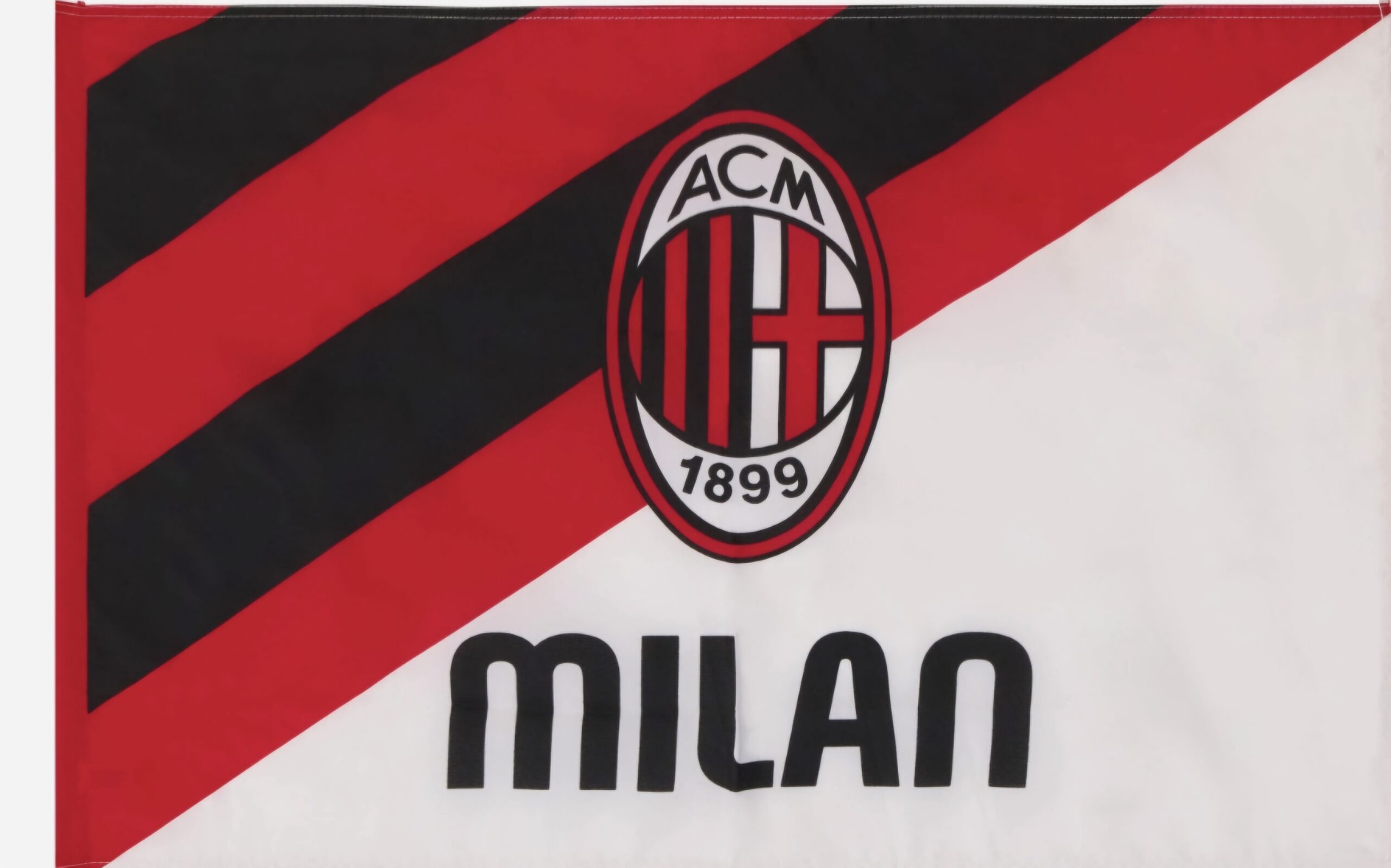
Throughout their long history, Milan’s identity has remained remarkably consistent. The home shirt has featured red and black vertical stripes, though the width of these stripes has varied depending on the era. The club crest traditionally incorporates the red and white cross of St. Ambrose, the patron saint of Milan, sitting alongside the iconic red and black stripes.
+-------------------------------------------------------------+
|                     AC MILAN SHIRT EVOLUTION                |
|                                                             |
|   1899–1910: Ultra-thin Red & Black stripes (English Style) |
|   1960–1970: Classic wide blocks, white away "Champions" kit|
|   1979–1980: Introduction of the Golden Star (10th Scudetto)|
|   1990–Pres: Modern technological fabrics, custom typography|
+-------------------------------------------------------------+
An enduring superstition within the club involves their all-white away kit. Dubbed the Maglia Fortunata (the lucky shirt), Milan traditionally chooses to wear all-white in European finals. They won six of their seven European titles in white kits (1963, 1989, 1990, 1994, 2003, and 2007), losing only to Ajax in 1995 and Liverpool in 2005 while wearing it.
Institutional Hall of Fame
| Era | Legendary Players | Core Managers | Major Honors |
| Pioneering Era (1899–1915) | Herbert Kilpin, Alfred Edwards, David Allison | Herbert Kilpin | 3 Italian Championships |
| Gre-No-Li Era (1949–1960) | G. Nordahl, N. Liedholm, G. Gren, C. Maldini | Lajos Czeizler, Gipo Viani | 4 Scudetti, 2 Latin Cups |
| Rocco & Rivera (1960–1979) | Gianni Rivera, José Altafini, Pierino Prati | Nereo Rocco, Nils Liedholm | 3 Scudetti, 2 European Cups, 3 Coppa Italia |
| The Immortals (1987–1991) | M. van Basten, R. Gullit, F. Rijkaard, F. Baresi | Arrigo Sacchi | 1 Scudetto, 2 European Cups |
| The Invincibles (1991–1996) | P. Maldini, D. Savićević, G. Weah, M. Desailly | Fabio Capello | 4 Scudetti, 1 UEFA Champions League |
| Ancelotti Era (2001–2009) | Kaká, A. Pirlo, A. Shevchenko, F. Inzaghi, A. Nesta | Carlo Ancelotti | 1 Scudetto, 2 UEFA Champions Leagues, 1 Coppa Italia |
| Modern Renaissance (2019–Pres) | Z. Ibrahimović, R. Leão, T. Hernández, M. Maignan | Stefano Pioli | 1 Scudetto |
Statistical Summary of Major Trophies
AC Milan stands as one of the most decorated football clubs in the history of the sport, maintaining a trophy cabinet that balances dominant domestic spells with historic continental triumphs:
- Italian Championship / Serie A (Scudetto): 19
- Titles: 1901, 1906, 1907, 1950–51, 1954–55, 1956–57, 1958–59, 1961–62, 1967–68, 1971–72, 1978–79, 1987–88, 1991–92, 1992–93, 1993–94, 1995–96, 1998–99, 2003–04, 2010–11, 2021–22
- Coppa Italia: 5
- Titles: 1966–67, 1971–72, 1972–73, 1976–77, 2002–03
- Supercoppa Italiana: 7
- Titles: 1988, 1992, 1993, 1994, 2004, 2011, 2016
- European Cup / UEFA Champions League: 7
- Titles: 1962–63, 1968–69, 1988–89, 1989–90, 1993–94, 2002–03, 2007–08
- UEFA Cup Winners’ Cup: 2
- Titles: 1967–68, 1972–73
- UEFA Super Cup: 5
- Titles: 1989, 1990, 1994, 2003, 2007
- Intercontinental Cup / FIFA Club World Cup: 4
- Titles: 1969, 1989, 1990, 2007
From the cold December evening in 1899 when Herbert Kilpin lit the spark, through the tactical revolutions of Nereo Rocco and Arrigo Sacchi, down to the modern global enterprise under RedBird Capital, AC Milan has remained an institution of passion, style, and continental prestige. The Rossoneri continue to carry their legacy forward as one of the true aristocracy of global football.