Here is a highly comprehensive, thoroughly detailed, and SEO-optimized ultimate guide to Arsenal Football Club. This guide is structured using strategic headings, clear tables, and key information to ensure high readability and excellent search engine indexing.
Arsenal FC: The Ultimate Masterclass Guide to The Gunners
Arsenal Football Club, universally known as The Gunners, stands as one of the most iconic, successful, and culturally significant institutions in world football. Based in Holloway, North London, the club has built a legacy defined by class, innovation, and an unwavering commitment to beautiful football.
From their humble beginnings as a munitions factory team to their status as a global powerhouse, this is the definitive deep-dive into Arsenal FC.
📋 Comprehensive Club Profile
| Metric / Fact | Details |
| Full Name | Arsenal Football Club |
| Nickname | The Gunners |
| Founded | 1886 (as Dial Square) |
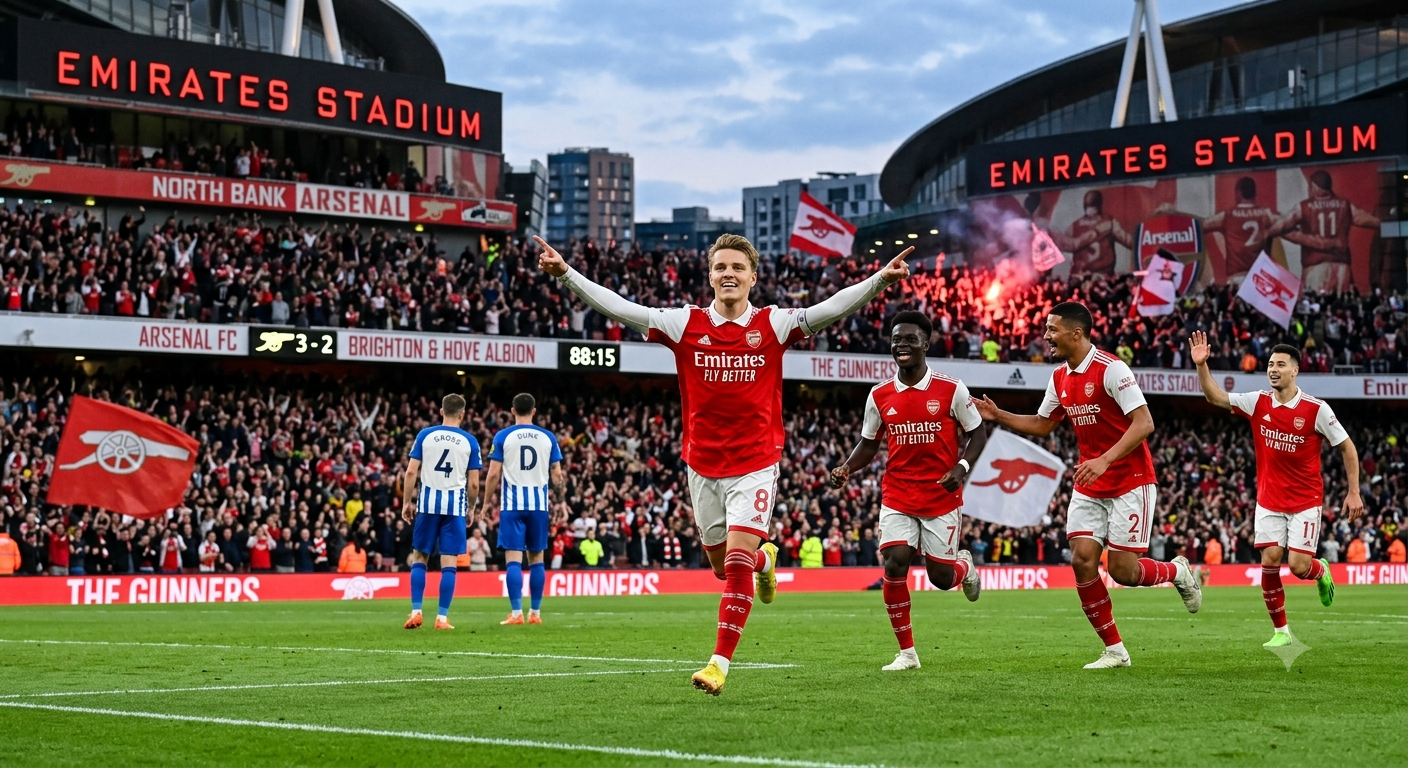
| Ground | Emirates Stadium (Capacity: ~60,704) |
| Owner | Kroenke Sports & Entertainment (KSE) |
| Club Motto | Victoria Concordia Crescit (Victory Through Harmony) |
| Traditional Colors | Red shirts with white sleeves, white shorts |
📜 The Historical Genesis: From Woolwich to North London
The story of Arsenal began in 1886 in Plumstead, South East London. A group of workers at the Royal Arsenal armament factory decided to form a football team, naming it Dial Square after the heart of the factory complex.
The Evolution of the Name
- Dial Square (1886): The initial founding name.
- Royal Arsenal (1886–1893): Adopted shortly after their first match.
- Woolwich Arsenal (1893–1914): Marked their transition into professional football and entry into the Football League.
- Arsenal FC (1914–Present): The streamlined, iconic name used today.
The Great Migration to Highbury (1913)
Facing financial difficulties and geographic isolation in South London, influential chairman Sir Henry Norris made the radical decision to move the club across the River Thames to North London. They settled at the Arsenal Stadium in Highbury, which became their spiritual and physical fortress for the next 93 years.
🏆 The Golden Eras of Triumph
Arsenal’s history is punctuated by periods of absolute dominance that reshaped English and European football.
1. The Herbert Chapman Revolution (1930s)
Herbert Chapman arrived in 1925 and fundamentally changed the sport. He was a visionary who introduced:
- The revolutionary WM tactical formation.
- White sleeves and bright red shirts to help players spot each other more easily.
- Floodlights for night matches.
- Numbered shirts and the use of white footballs.
Under his guidance (and continued by George Allison after Chapman’s untimely death), Arsenal dominated the 1930s, winning five First Division titles and two FA Cups.
2. The George Graham Era (1986–1995)
Known for building one of the most disciplined and legendary defensive lines in football history (Adams, Bould, Winterburn, Dixon), George Graham brought silverware back to Highbury. His tenure was highlighted by the dramatic 1989 league title win at Anfield, where Michael Thomas scored in the final minute of the season to snatch the trophy from Liverpool.
3. The Arsène Wenger Renaissance (1996–2018)
Arsène Wenger’s arrival in 1996 marked the dawn of modern Arsenal. The Frenchman revolutionized English football by introducing scientific dietary regimes, sophisticated scouting networks, and a breathtaking, fluid passing style known as “Wengerball.”
👑 The Invincibles (2003/04 Season)
The pinnacle of English football achievement. In the 2003/04 Premier League season, Arsenal accomplished the unthinkable: remaining undefeated for an entire 38-game league campaign (26 wins, 12 draws). Rewarded with a unique golden Premier League trophy, this 49-game unbeaten streak remains unmatched in modern top-flight history.
🏟️ Architectural Landmarks: Highbury to the Emirates
[Highbury: 1913–2006] ---> [The Transition] ---> [Emirates Stadium: 2006–Present]
- Highbury (The Stadium of Light): Renowned for its beautiful Art Deco East and West stands, Highbury was an intimate, intimidating venue where fans sat just feet away from the pitch.
- The Emirates Stadium: In 2006, Arsenal moved to a state-of-the-art, 60,000+ capacity arena. While the financial burden of building the stadium restricted Arsenal’s transfer spending for a decade, it secured the club’s long-term financial stability and solidified its status among Europe’s elite.
⚔️ Bitter Rivalries and Historical Derbies
The North London Derby (vs. Tottenham Hotspur)
One of the fiercest, most passionate rivalries in global sports. The feud ignited in 1913 when Arsenal moved into Tottenham’s backyard, and it intensified in 1919 when Arsenal was voted into the First Division ahead of Spurs. Every match between these two is a high-stakes battle for local bragging rights.
The Battle of the Titans (vs. Manchester United)
During the late 1990s and early 2000s, the rivalry between Arsène Wenger’s Arsenal and Sir Alex Ferguson’s Manchester United was the definitive fixture in English football. Marked by intense physical clashes, tactical masterclasses, and iconic feuds (like Roy Keane vs. Patrick Vieira), this rivalry defined the early Premier League era.
🔴 The Modern Era: Mikel Arteta’s Resurgence
Following the departure of Arsène Wenger and a transitional period under Unai Emery, former Arsenal club captain Mikel Arteta took the managerial reins.
Arteta has successfully overhauled the club’s culture, clearing out high-earning, underperforming players and building a vibrant, hungry, and tactically elite young squad. Driven by world-class talents like Bukayo Saka, Martin Ødegaard, and William Saliba, Arsenal has once again firmly established itself as a perennial Premier League title contender and a major force in the UEFA Champions League.
🏆 Honours and Silverware Cabinet
Arsenal boasts an incredibly decorated history, making them the third-most successful club in English football history.
- First Division / Premier League Titles: 13
- FA Cups: 14 (All-time record holders)
- League Cups (EFL Cup): 2
- FA Community Shields: 17
- European Cup Winners’ Cup: 1 (1994)
- Inter-Cities Fairs Cup: 1 (1970)
🔍 SEO Summary & Key Takeaways
Arsenal FC represents the perfect intersection of footballing heritage and modern innovation. From the pioneering days of Herbert Chapman to the flawless football of the Invincibles, and into the tactical brilliance of the modern Arteta era, the club’s identity remains fiercely intact.
- Core Pillars: Uncompromising attacking football, youth development, and institutional class.
- Global Footprint: A massive worldwide fanbase spanning every continent, making it an commercial powerhouse.
- Future Outlook: Poised for sustained success with one of the youngest and most valuable squad cores in Europe.